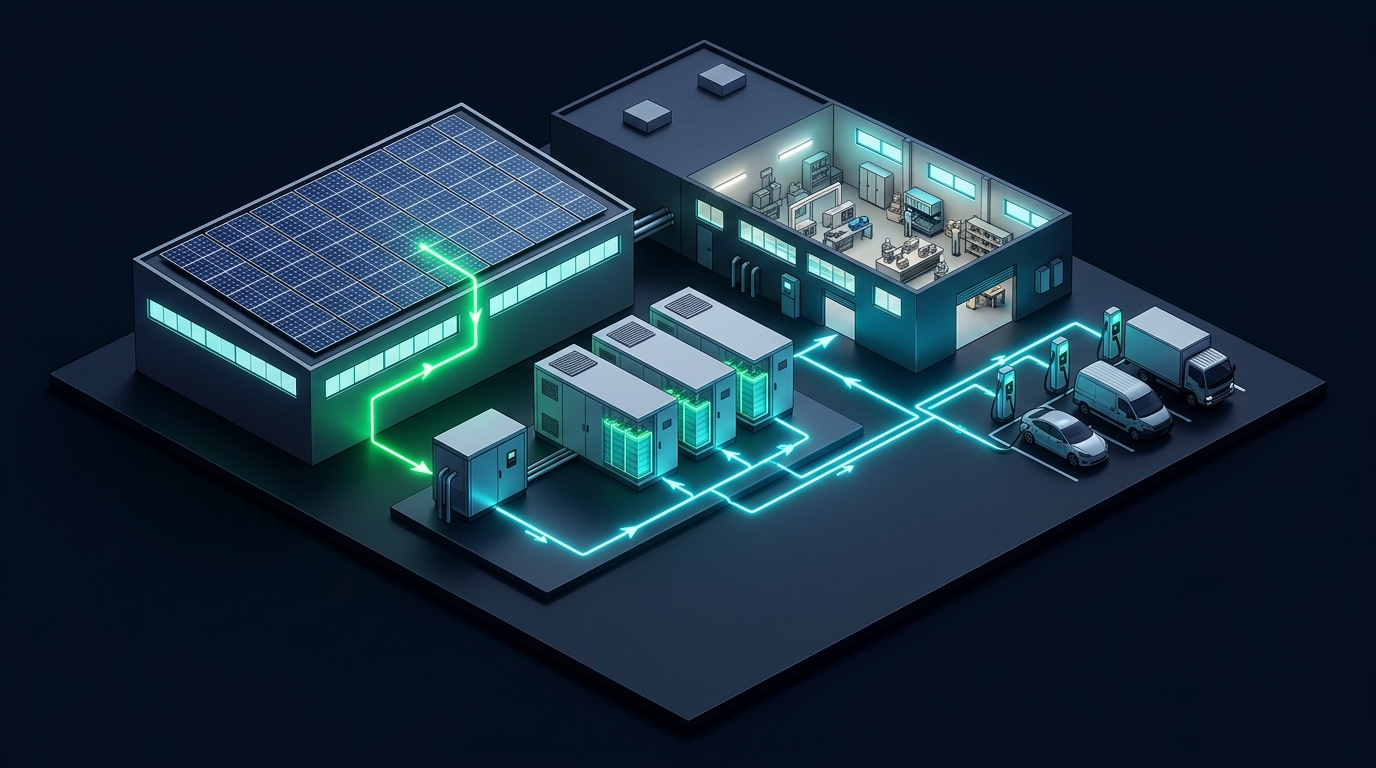
1. Understanding Commercial Demand Tariffs & Peak Shaving Dynamics
In commercial and industrial (C&I) facilities, electricity utility bills consist of two distinct billing mechanisms: volumetric consumption charges (kWh) and maximum peak demand charges (kW or kVA). Across key markets in North America, Europe, Australia, and South Africa, peak demand charges frequently account for 35% to 50% of an enterprise's monthly power bill.
Unlike residential tariffs where consumers are billed solely on the total kilowatt-hours consumed over a month, commercial utility meters continuously record instantaneous average power in rolling 15-minute or 30-minute intervals. The single highest interval window recorded during on-peak operating hours dictates the demand charge tariff applied across the entire billing cycle.
A sudden 100 kW load spike lasting only 20 minutes (e.g. cold-store compressor startup, metal stamping stroke, or multiple EV vans charging simultaneously) establishes the billing benchmark for all 720 hours of the month, incurring thousands of dollars in avoidable capacity penalty fees.